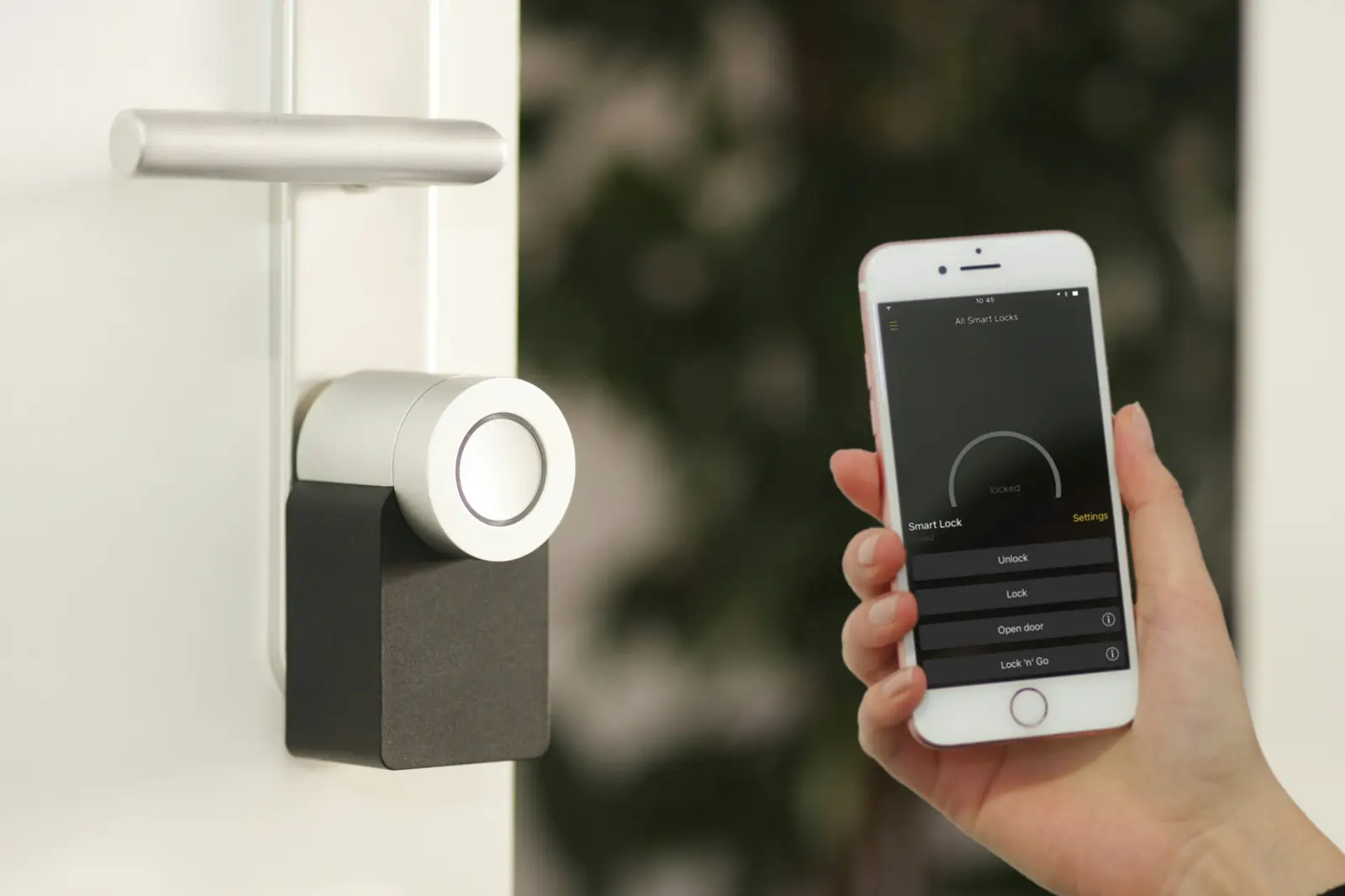
Imagine your alarm system tells you there is a water leak at home, and you are hours away. Someone needs to get in now. With a smart lock, you open the door from your phone for the plumber, then lock it again when they leave.
Or the quieter version: you want to know when the kids get home from school. The lock and the alarm can tell you they are in, and that the door is locked behind them.
Two physical types
Smart locks come as deadbolts or as handle and lever sets, in finishes such as oil rubbed bronze, satin nickel and bright brass. We install Yale, August, Schlage and Kwikset among others. Each has a Z-Wave or Zigbee radio inside, so it can talk to a control system and to your phone.
A smart deadbolt has a touchscreen or a button keypad for a four to six digit code, and a motor that drives the bolt. A lever lock works the same way with a handle. If a door has both, we make one of them the smart lock and keep the other as a manual lock for extra security.
Every unlock is logged. Every code can be different.
Know the limits
Remote control needs an internet connection at the house. If the internet is down, you cannot unlock from afar, though the keypad at the door still works.
And batteries do run out. The locks we use can still be opened when that happens: most have a hidden terminal underneath where a battery can be held to power the keypad long enough to enter your code.
Bring in the garage
Most garage door openers now have their own app that shows whether the door is open or closed. Some can only be controlled from the maker's app. Others work with platforms such as Control4 or Honeywell, so the garage, the locks and the alarm live together in one place. We know which is which, and will specify equipment that fits together, or keep it separate if you prefer.